
 Image 1 of 3
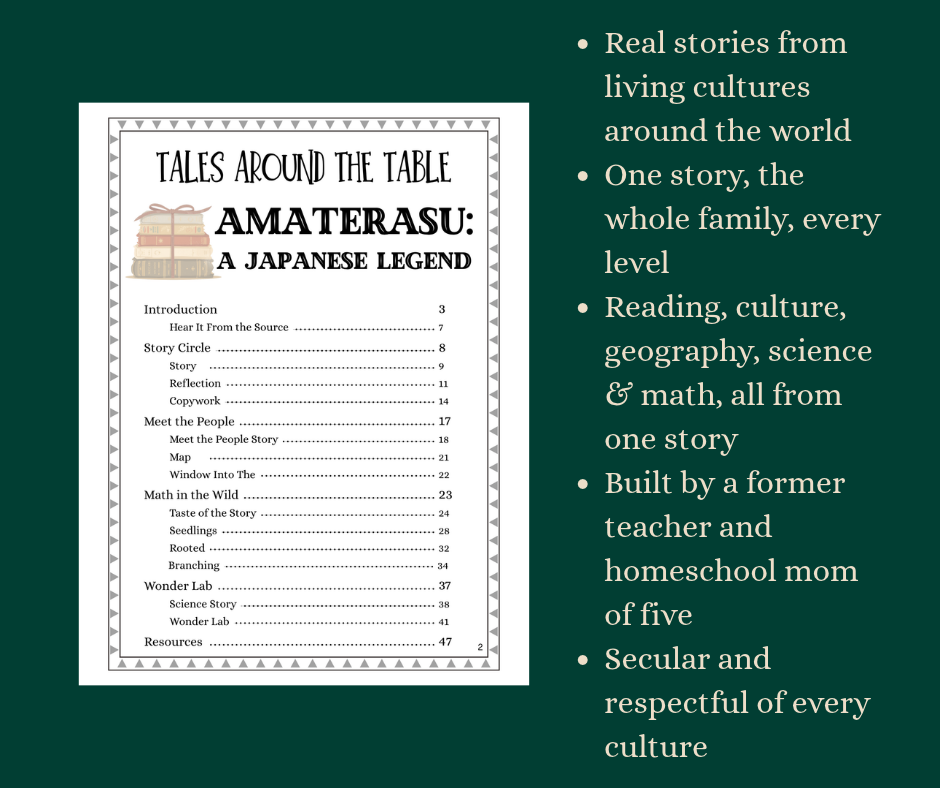 Image 2 of 3
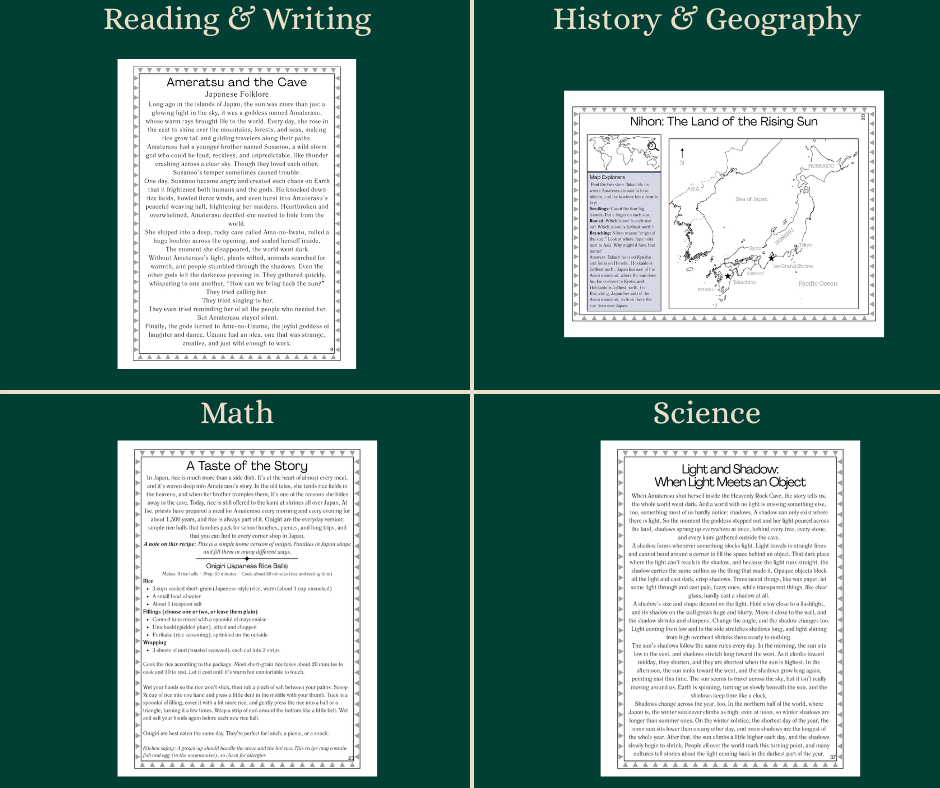 Image 3 of 3
This week your crew explores the story, then follows it into math, science and the Japan of today, where Amaterasu is still honored at Shinto shrines.
What’s inside
The story from Japanese sources, plus a read-aloud retelling for younger listeners
Story Circle, reflection and copywork pages to go with the story
Meet the People: Japan today, including Shinto shrines, Takachiho and Ise, and the winter customs families still keep
Print-friendly black-and-white maps of Japan, in labeled and blank versions
A Window Into the World activity: draw your own Shinto shrine
A Taste of the Story: onigiri (rice balls), with Kitchen Math that works even if you aren’t cooking that week
Hands-on math mats for each level, made from cups, yarn, uncooked spaghetti and other things you already have, with no worksheets. Younger kids follow a map to find where Amaterasu is hiding, middle kids measure the mirror’s path across the grid, and older kids use crossing lines to work out exactly where to hang the mirror. This is week two of the Coordinate Plane block in Math in the Wild.
Wonder Lab: light and shadow. Kids track shadows through the day and find out why the winter solstice brings the longest noon shadows of the year.
Answer keys, a resource list, and a Dear Teacher letter for co-ops and classrooms
Who it’s for
It’s for secular homeschool families with kids at different ages learning together at one table, from about kindergarten through 8th grade and up, in three levels: Seedlings, Rooted and Branching. It works just as well for co-ops and classrooms.